Edible Ecosystems Emerging
Food Forestry for the 21st Century
9-Day Forest Garden Design Intensive
October 16 – 25, 2026
In this nine-day intensive course, you will dig deeply into the vision, theory, and practice of designing wholesome, dynamic, and resilient edible ecosystems using temperate deciduous forests as models.
Dig Deep Into Forest Garden Design
With Dave Jacke, Author of Edible Forest Gardens

Forest ecosystems hold powerful lessons for us – modeling qualities we can bring into our culture, agriculture, and horticulture to create systems that thrive for generations:
- They maintain, renew, fertilize, and propagate themselves without human inputs.
- They build, store, and conserve clean air, clean water, nutrients, soil quality, and biodiversity.
- They exhibit stability, resilience, and adaptability.
These qualities emerge from the dynamics of the forest as a whole system, not from any one or more of the elements that comprise the forest alone. To design productive edible ecosystems that express these same qualities, we must understand ecological principles and forest structures, functions, patterns, and processes, and use this knowledge wisely.
In this nine-day intensive course, you will dig deeply into the vision, theory, and practice of designing wholesome, dynamic, and resilient edible ecosystems using temperate deciduous forests as models.
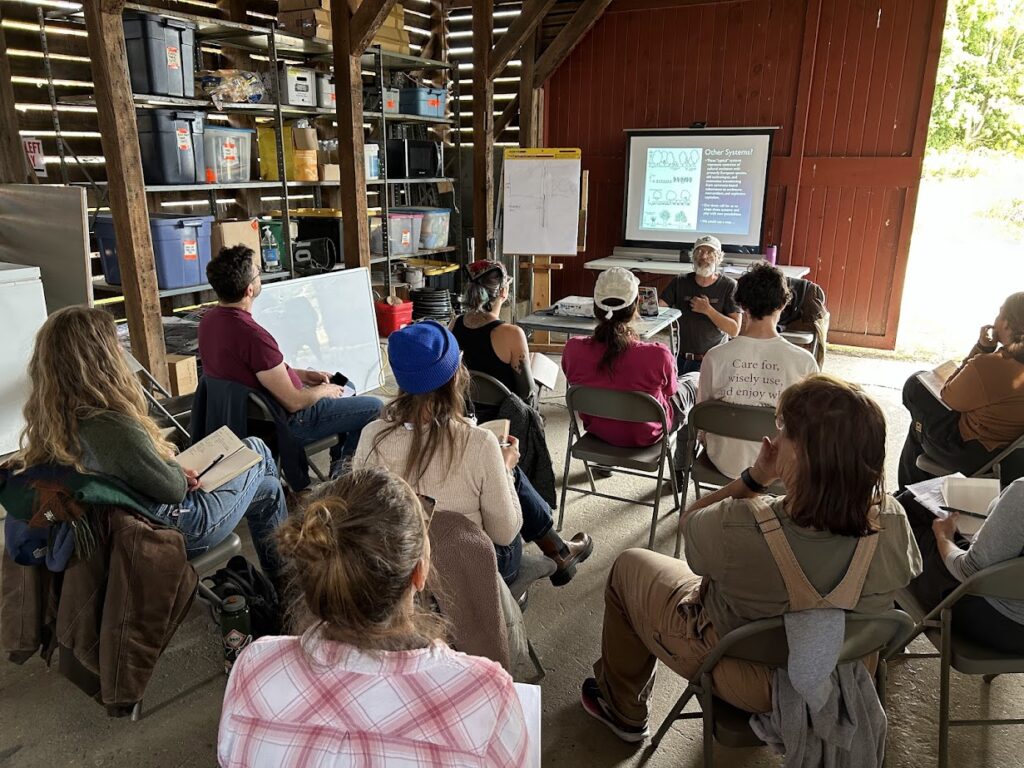
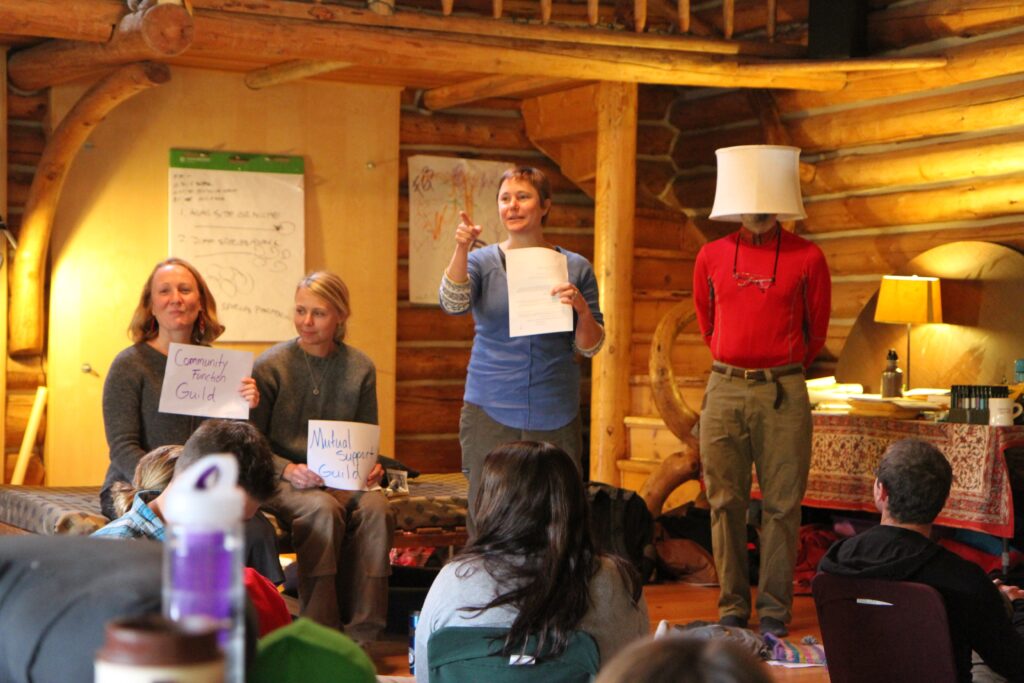
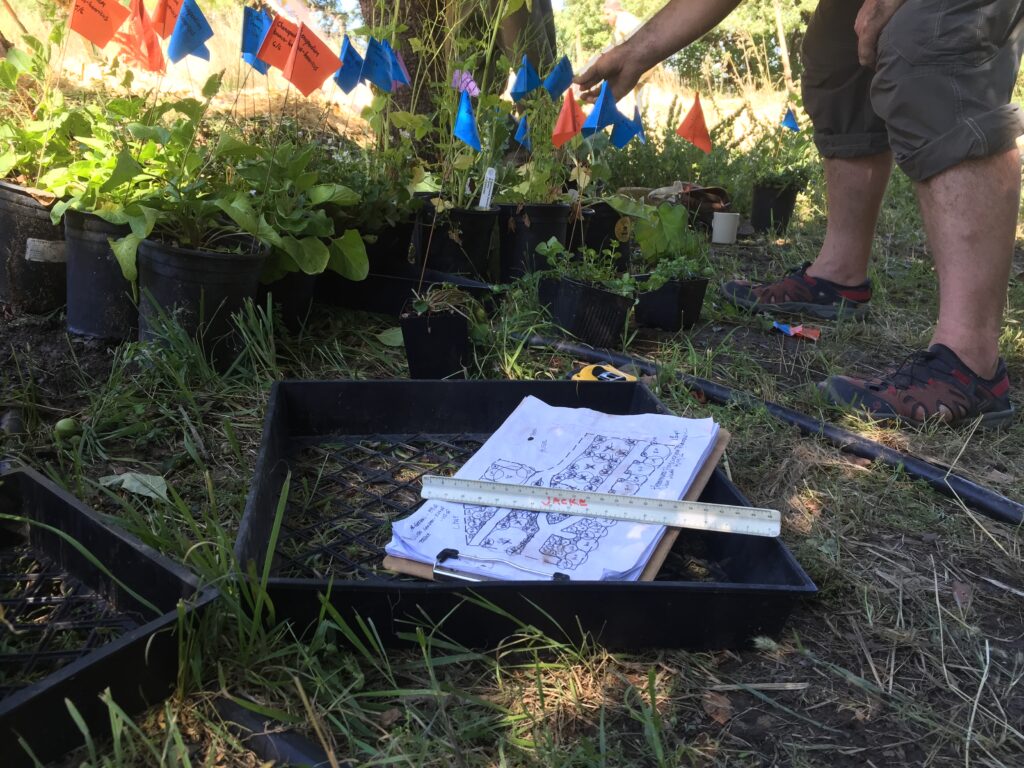
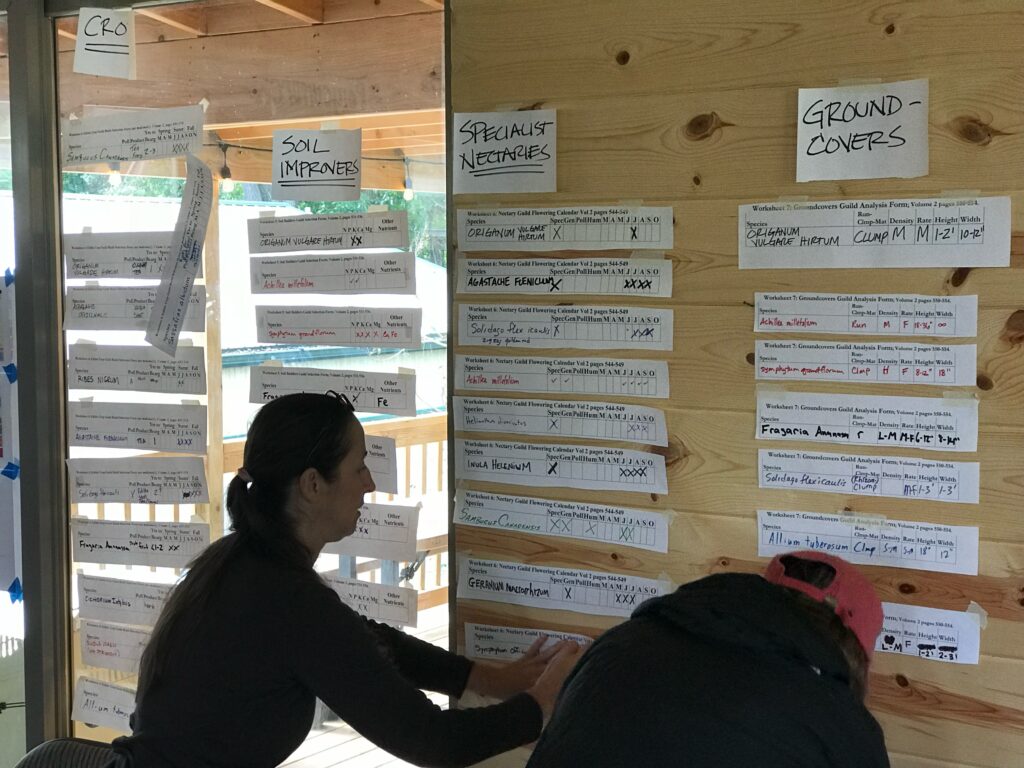
Dave Jacke and his team will offer creative experiential classes, lectures, site walks and design exercises to help you understand how the architecture, social structure, underground economics, and successional processes of natural forests apply to the design of edible ecosystems of all kinds.
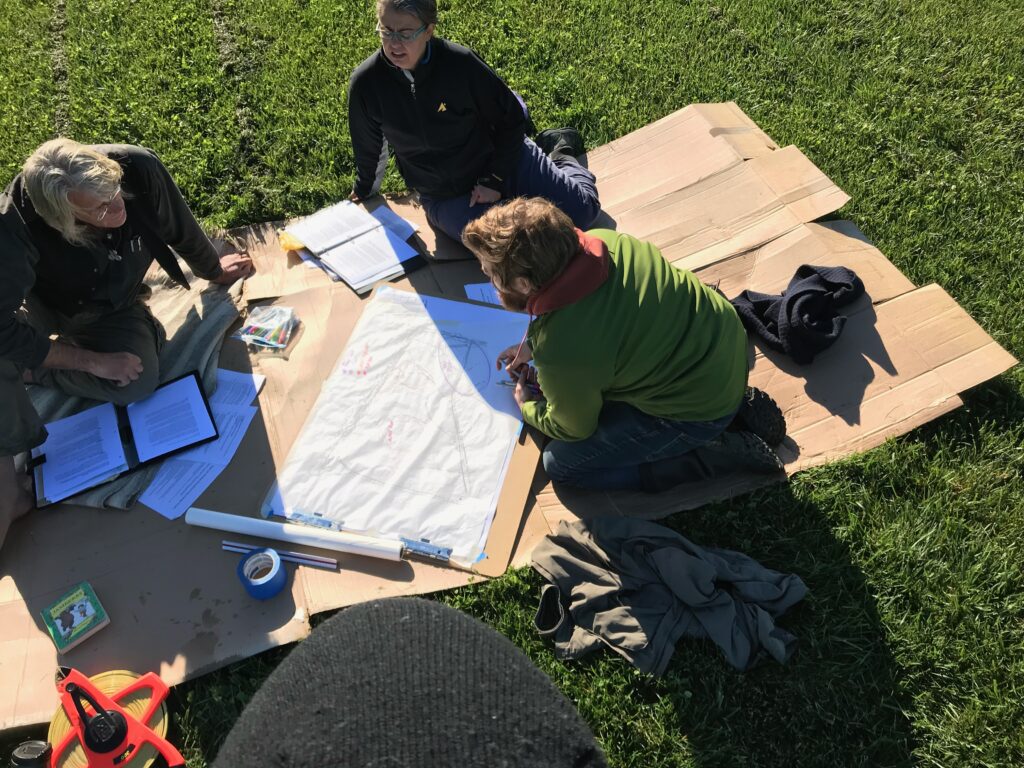
You’ll learn a variety of ecological design processes while designing a range of food-producing ecosystems at Horn Farm Center. Design projects could include designing forest gardens for: urban or suburban homesteads, or farm-scale (2 to 100 acres). We’ll also engage with issues of garden management, economics, and the deep paradigmatic shifts required to succeed at co-creating “humanatural” landscapes and cultures.
You will leave inspired and empowered to design food forests at home for yourself, and your friends, neighbors, and clients.
Register soon!
Spaces are limited and filling up.
For the best access to scholarship funding, lodging, and a spacious payment plan, we encourage you to register before July 10, 2026. However, registrations will remain open up to Thursday, October 1st.
See “Payment & Logistics” below for details.
Program Schedule:
Friday, October 16 – Sunday, October 25, 2026
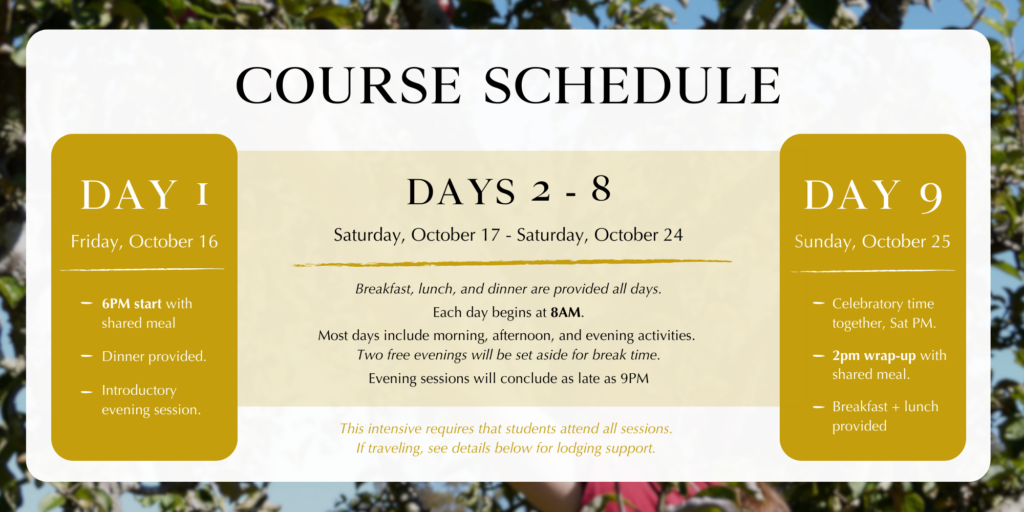
The exact schedule for this course is subject to change, but typically each day will begin at 8 AM and include multiple sessions and activities from morning through the afternoon and all but two evenings. The program officially begins on Friday, October 16 at 5:00 PM and concludes on Sunday, October 25 at 2:00 PM.
For planning, expect that each full day of the course (Saturday, 10/17 – Saturday, 10/25) will require a commitment for the entire day, as late as 9PM. It’s this commitment that makes the course a Forest Garden Design Intensive.
Early registrations are encouraged to secure your spot in this program. Spaces are limited!
For the best access to scholarship funding, lodging, and a spacious payment plan, register before July 10th, 2026. See “Payment & Logistics” below for details.
Program Glimpses:
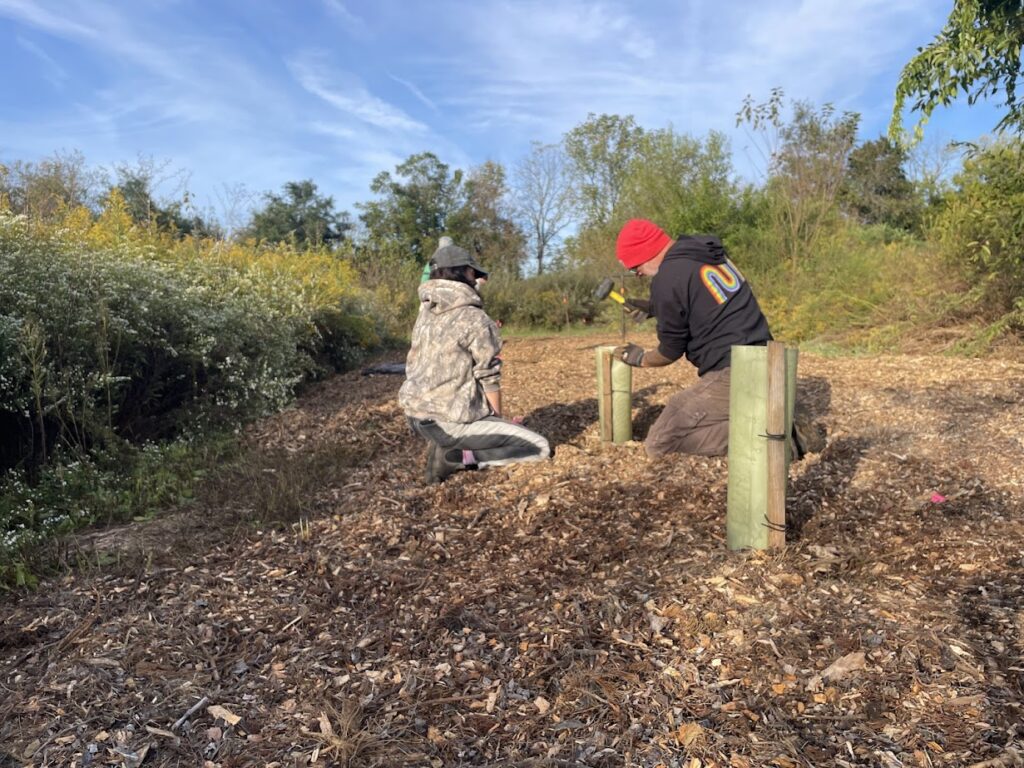
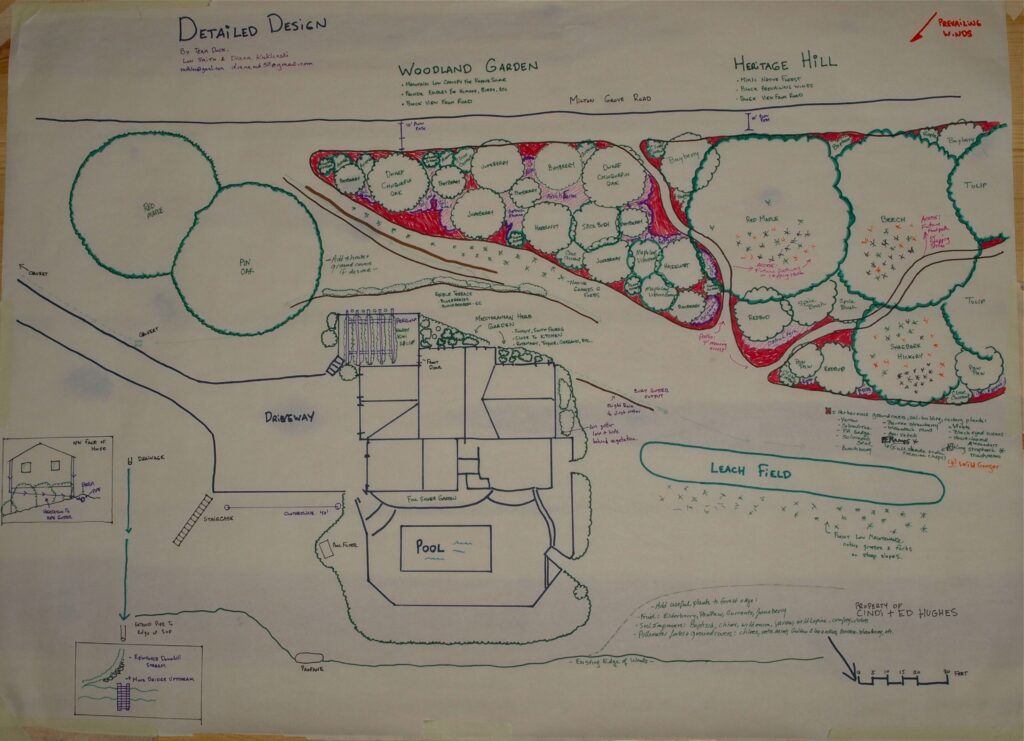
Who is this Program For?
We all have what it takes to be ecological designers. The ability to design lives in all of us, and nature lives in and through us all. Practicing ecological design can heal us and the land.
Anyone eager to touch the soil, expand their perspective, and transform land into a dynamic edible ecosystem will find their fit in this program. From personal enrichment to professional application, the skills you’ll learn are versatile, transferable, and perennial.
The design philosophies and processes covered in this course can apply almost anywhere. Those who will find this experience especially useful are folks based in the US Mid-Atlantic, Northeast, Midwest, and Eastern Canada.
- Landowners: cultivate a backyard food forest to feed yourself and your family, increasing food security and quality, beauty, and earth-wise living.
- Farmers (aspiring and active): gain experience in agroforestry and food forest design to diversify and enrich your business.
- Landscape professionals (aspiring and active): learn more about edible foodscapes for residential and public contexts, and build your resume as a consultant, planner, or practitioner.
- Community changemakers: improve food access and community well-being through applying food forest models to public spaces that need it most.
- Landless earth tenders: explore edible landscaping hands-on while meeting others who share your passion for regenerative living.
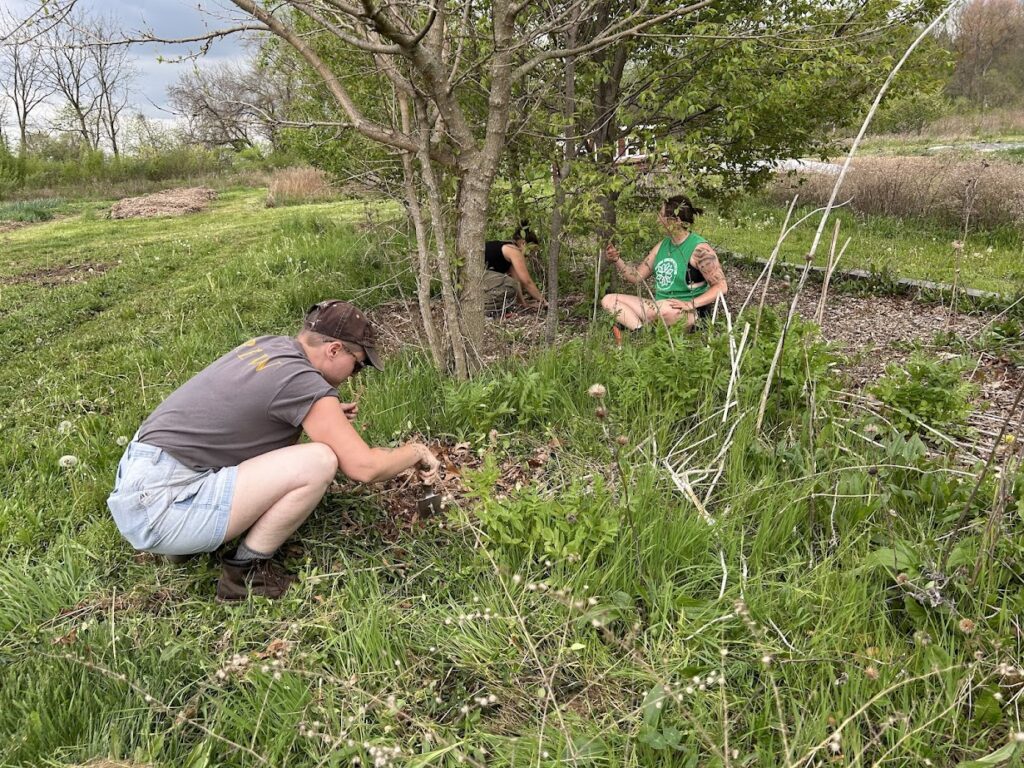
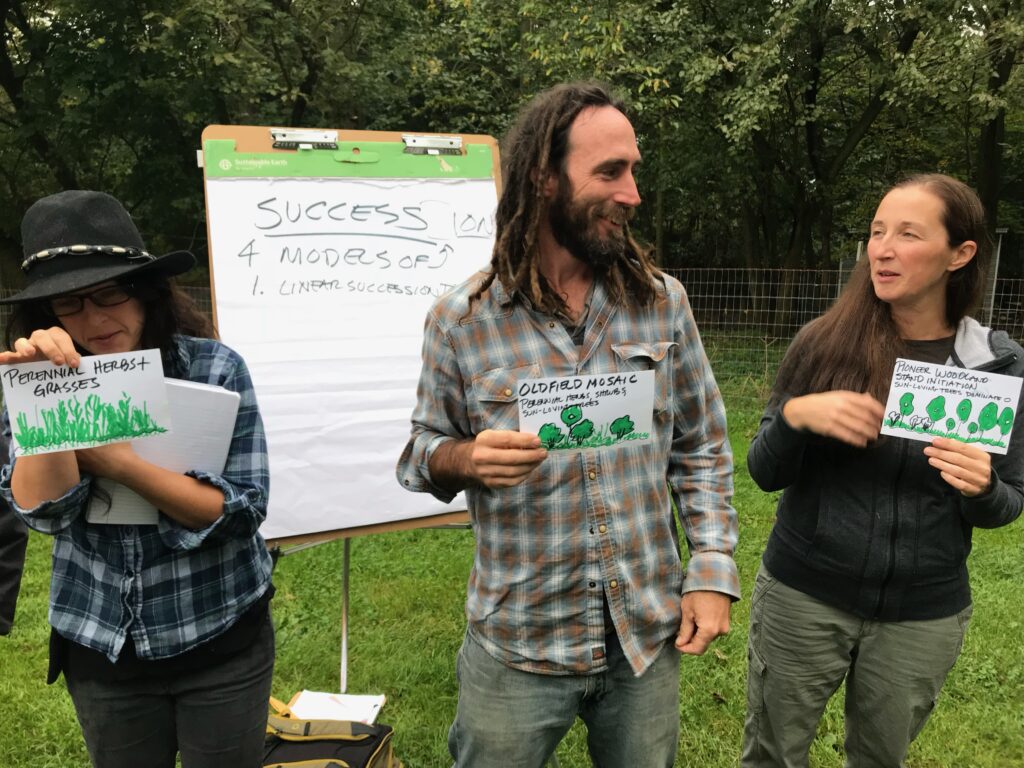
What You Will Learn
This Forest Garden Design Intensive goes beyond hard skills. It’s an experience for the mind, the body, and the soul, modeled after the very ecosystems that inspire us. Expect to transform the land, and yourself in the process.
Through this learning experience, you will:
Ecological Literacy
- Understand the core elements of ecology that influence design, including ecosystem architecture, social structures, nutrient dynamics, and succession.
Forest Garden Design Proficiency
- Understand forest garden design theory and processes by working through three design exercises, two short and one long.
- Experience designing urban, suburban, or farm-scale food forests in a multi-day design project.
- Engage with goals articulation, site analysis and assessment, design-phase processes, guild and polyculture design, and forest garden implementation.
- Gain greater competency and confidence in designing and installing forest garden projects on your own.
Social Connectivity
- Build meaningful memories and long-lasting relationships with people who share your passion.
- Expand out of your comfort zone and experience personal growth.
- Gain public speaking experience to demystify ecological design to others.
- Doodle, dance, laugh, and explore: learning through play and playing to learn.
A Lasting Impact
- Gain clarity, direction, and inspiration for incorporating ecological design philosophies and projects into your life and community.
- Help design future educational landscapes for a real client: the Horn Farm Center!
Meet the Classroom:
The Horn Farm Center
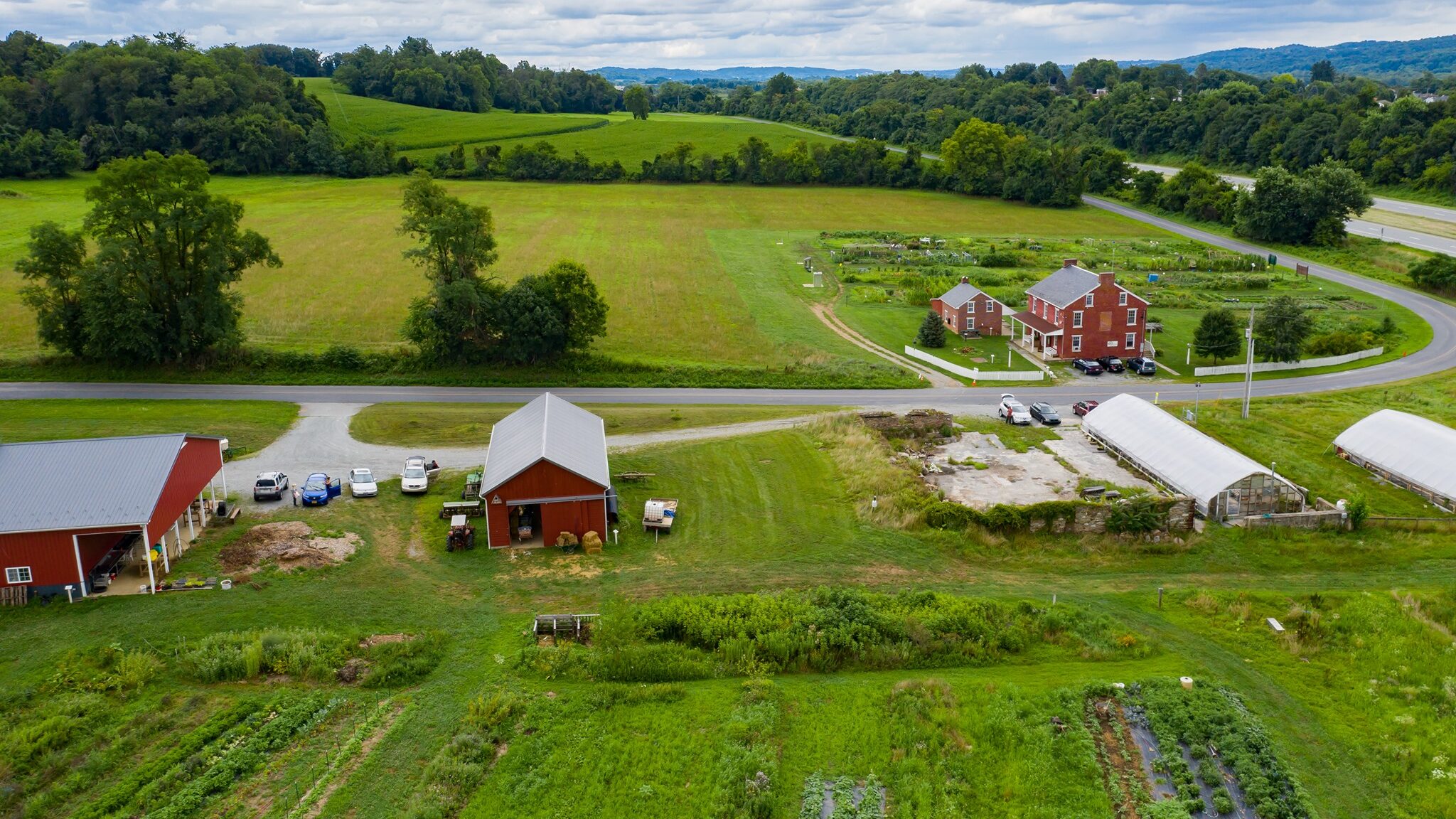
The Horn Farm Center comprises 186 acres of distinct landscapes. Together, these landscapes reflect the legacies of human activity in the Lower Susquehanna Region, alongside possibilities for a regenerative future.
Recovering second-growth forests and mid-successional meadows accompany large acreages of commodity cropland, which are managed regeneratively by neighboring farmers. Historic activities on the land–representing over 150 years of European-style faming–include livestock grazing, cereal grain production, orchards, and even localized mining for iron ore.
In the early 2000s, community members rallied together to save the Horn Farm from industrial development. This marked the farm’s transition to a nonprofit, with a focus on agricultural education. Since these humble beginnings, the Horn Farm Center’s focus has extended beyond gardening and agriculture, embracing ecological land stewardship in all its forms. Over 30 acres of the land today consists of demonstration and experimentation spaces for regenerative agriculture, agroforestry, and ecological restoration. These regenerative approaches are made possible by the farm’s official preservation under a conservation easement with the York County Farm and Natural Lands Trust, secured in 2016.
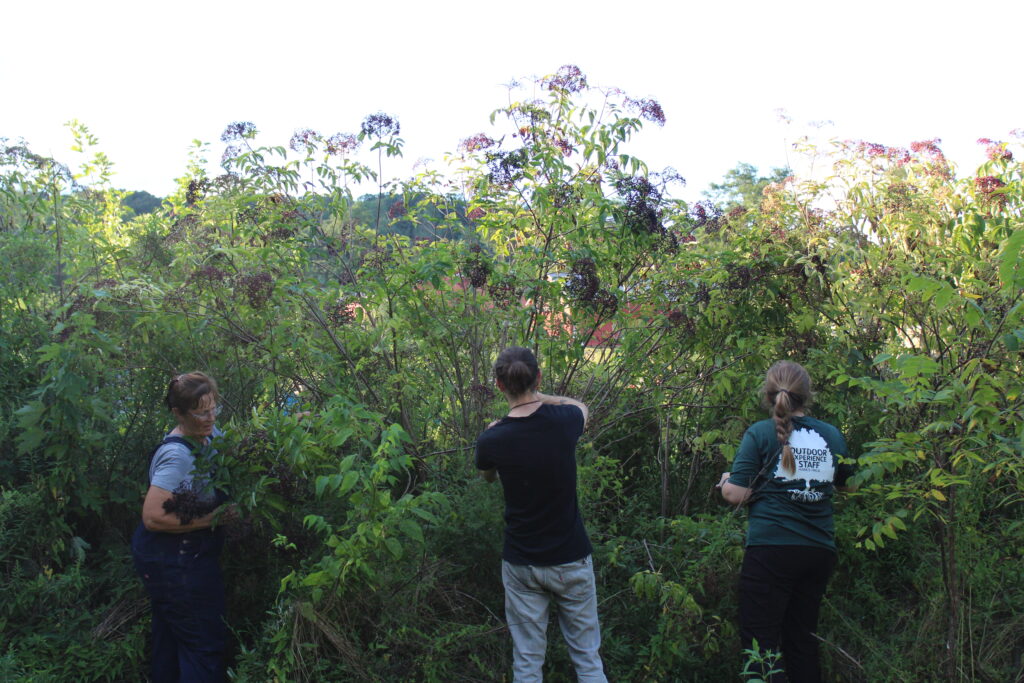
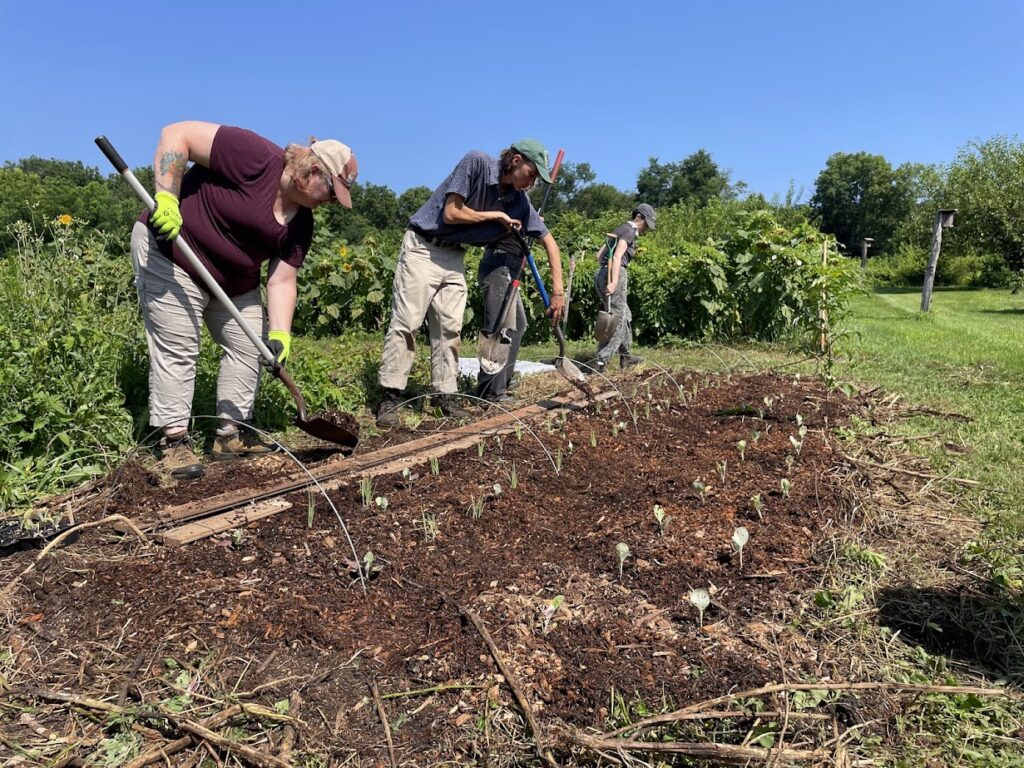
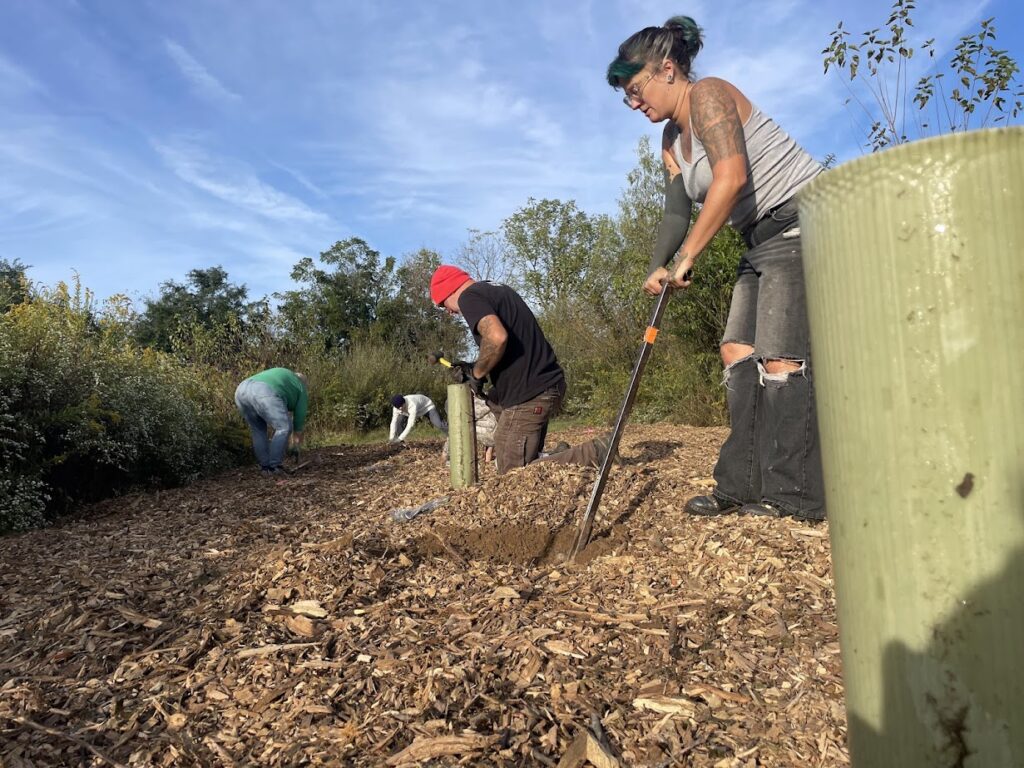
People today can come to the Horn Farm for a variety of experiences. These include classes, service learning workdays, and special events like the York County Pawpaw Festival. The land is a living classroom for deepening connection and learning how to live regeneratively; it’s a space that combines gardening and agroforestry, ecological restoration, foraging, natural crafts, ancestral skills, and more. While the scars of history remain–from eroded waterways to struggling biodiversity–the farm presents the possibility of rekindling our roles as productive members of the ecosystem.
Geographically, the Horn Farm is located just west of the Lower Susquehanna Riverlands, a conservation landscape recognized by the state of Pennsylvania. It is firmly nestled in Pennsylvania’s Piedmont Province; its runoff drains to the Susquehanna River and Chesapeake Bay. The farm is also at the crossroads of population centers linked by the busy cooridors of Route 30 and Interstate 83. It is 10 miles east of York, PA; 20 miles west of Lancaster, PA; 30 miles south of Harrisburg, PA; and 60 miles north of Baltimore, MD.
Click here to learn more about the Horn Farm’s mission and vision.
Click here to explore the Horn Farm’s landscape with a virtual tour.

Payment & Logistics
Program Cost: $2150
Sliding Scale: $1850 – $2450
This program offers sliding scale tuition. When registering, students will select a cost that aligns with their financial flexibility. We encourage folks to be generous if possible when selecting their payment tier, as any amounts paid over the base of the sliding scale automatically go into our scholarship fund.
- Standard Cost: $2150
- Reduced Cost: $1850
- At 85% of the standard rate, the reduced cost is meant for folks with financial constraints who need assistance to join the program.
- If additional cost offsets are needed, please check in with us at education@hornfarmcenter.org. Scholarship funding is available and distributed on a first-come, first-served basis.
- Pay-It-Forward: $2450
- At 115% of the standard rate, pay-it-forward helps us offset the cost of supporting reduced rate registrations. This option is encouraged for folks with financial means who would like to support access for other participants.
Cost Coverage
Payment for this program covers tuition and all meals. Broken down, payment at the standard cost of $2150 comes out to $25 an hour for over 80 hours of classroom and field experience, including three meals per day during full-day classes.
Deposit & Payment Dues
A $250 deposit is required upon registration, with payment in full due no later than October 15, 2026.
This deposit is non-refundable and secures your spot in the program.
Payment Plans
Payment plans support financial accessibility by distributing the program balance over multiple installments.
Four Installments: registrations before July 10, 2026
Students who register before July 10 will automatically receive a four-installment monthly payment plan to cover remaining expenses. Payments will be due by July 15, August 15, September 15, and October 15.
At the standard program cost, this payment plan will amount to $400 each month for four months.
Two Installments: registrations after July 10, 2026
Students who register after July 10 will automatically receive a two-installment plan with full coverage due by October 15. At the standard program cost, this payment plan will amount to two payments of $950.
If you are enrolling with a payment plan but need to request a customized payment schedule, please contact us at education@hornfarmcenter.org. These exceptions are only provided in cases of financial need.
Cancellation Policy
If you cancel your registration up to 2 months prior to the start of class, we will refund all of your payments to date minus the $250 non-refundable deposit.
If you cancel less than 2 months prior to the start date, we will only refund your payments, minus the $250 non-refundable deposit, if another paying student fills your space.
There are absolutely no refunds once the course has begun.
Attendance in all sessions is expected. There are no refunds or discounts for partial attendance.
Funding Your Enrollment
If affordability is a barrier, you may be able to offset costs through future service as a Forest Garden Designer in your community!
Our instructors have created a guide and resources, linked below, to help you obtain financing through Community Supported Education (CSE). Simply put, CSE is a partnership between you and a funding partner. You can propose educational or professional services–rendered after the course–in exchange for a partner’s investment in your enrollment.
Read the packet below for information on proposing a CSE to help fund your participation:
Scholarships
Any additional aid beyond the minimum cost ($1850) depends on the number of students enrolling above the Standard Cost payment tier. Therefore, our ability to award scholarships will change throughout the registration period. If scholarship funds become available, they will be provided on a first come, first served basis. The sooner you register, the more likely you are to receive scholarship support if requested!
Please note that additional cost offsets beyond the Reduced Cost tier of the sliding scale are not guaranteed. It’s likely that any scholarships distributed will cover 25% of the program cost or lower.
To request additional financial support, please inquire at education@hornfarmcenter.org.
Meals
All meals in this course are covered by the cost.
Meals will be curated and prepared by York-based Chef Liza Naylor of Locally Seasoned. With her focus on health, quality, and sustainability, Liza will incorporate local and seasonal ingredients wherever possible.
When registering, you will be asked to indicate any dietary restrictions you have. This will ensure that we can provide meals suited to your needs.
Lodging
Program fees cover tuition and meals. Lodging is not included. Students must coordinate their own lodging for the nine days of the course.
However, when registering, you’ll be asked to answer a few questions about your lodging needs to help us support traveling students with finding and affording accomodations. Possible arrangements include:
- Securing a group discount with a local hotel: more information will be available in June!
- Connecting out-of-town students with each other to coordinate shared lodging
- Connecting out-of-town students with local students who are willing to host them for the duration of the program.
If you will be booking a room for the course, we recommend registering now but waiting until June to secure lodging. Group rates at a local hotel may be available by then. Updates on this will be communicated to all registered students.
Limited indoor rooms and campsites are also available at Heritage Creek Farm Camp, located 30 minutes from the Horn Farm. Reach out to Cindi Hughes at info@heritagecreekfarmcamp.com to inquire.
For more information on nearby accomodations, see below:

Meet the Instructors
Dave Jacke
Dave Jacke is the lead author of the award winning two-volume book Edible Forest Gardens. An engaging and passionate educator, Dave is also a meticulous designer. He has studied ecology and design since the 1970s, and has run his own firm—Dynamics Ecological Design—since 1984. He has designed, built, planted, and managed landscapes, homes, farms, and communities around North America, as well as overseas, and inhabited forest gardens at his current and past homesteads. He holds a B.A. in Environmental Studies from Simon’s Rock College (1980) and a M.A. in Landscape Design from the Conway School of Landscape Design (1984). Read more at edibleforestgardens.com.

Aaron Guman
Aaron Guman has farmed grass-fed beef, designed and built ecological landscapes, conducted perennial farm research, and led nonprofits. He currently serves as Project Manager for ADAPT Agroforestry, a collaborative, five-year, USDA-funded research project studying agroforestry systems at multiple farms and universities across New England. Aaron also supports agroforestry adoption as a Co-Curator of the Agroforestry Working Group with the Vermont Farm to Plate Network, and as the Membership Coordinator for the National Agroforestry Coalition. His ultimate goal is getting trees on farms to benefit farmers, communities, and ecosystems. Aaron took this course in 2011, and trained as a teacher with Dave, as well. A native of Pennsylvania, Aaron now homesteads with his partner in central Vermont

Jon Darby
Ecologist-at-heart Jon Darby is a wild foods enthusiast and educator, avid gardener, and former farmer. He has served the Horn Farm Center in varying capacities since 2009, where he currently acts as Farm and Agroforestry Manager. Jon received his Permaculture Design Certification in 2011 from Susquehanna Permaculture and in 2014 completed his Permaculture Teacher Training through Dynamics Ecological Design. He loves to travel and meet new places and people, but feels most at home in the hills and valleys of the Susquehanna River where he was raised. He is married with 2 kids and 3 cats.